
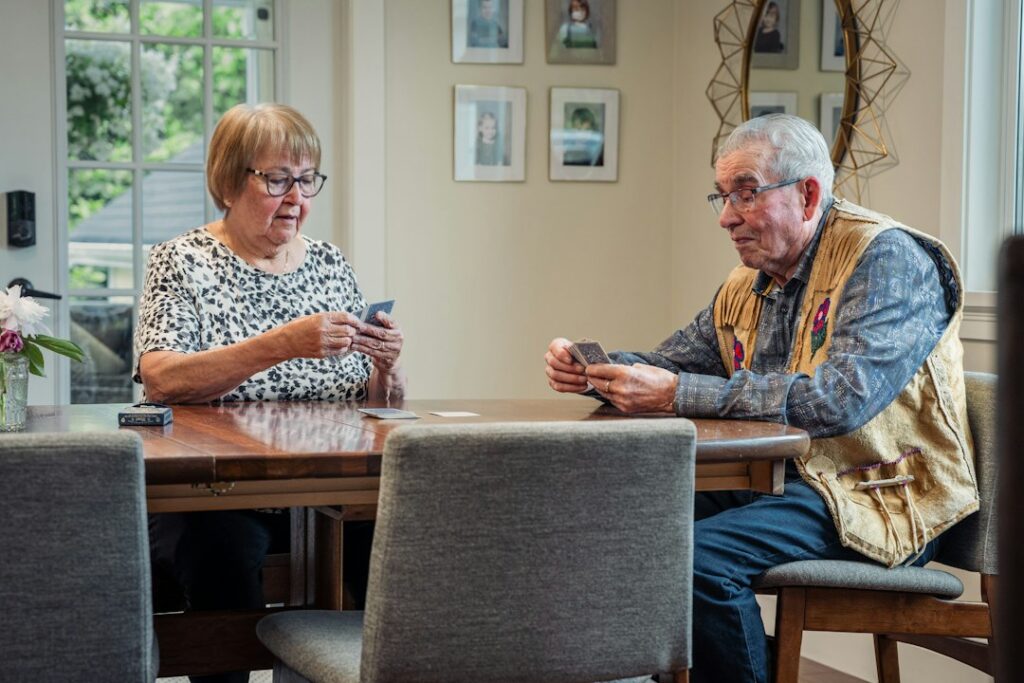
Assisted living recreation is designed to support social connection, movement, mental stimulation, creativity, and personal choice. Activities may include group programs, quiet hobbies, outdoor time, exercise, entertainment, educational sessions, and opportunities to help with everyday community life.
A strong activity program is not simply a calendar filled with events. It should give residents meaningful ways to spend time, maintain familiar interests, try something new, and remain connected to other people.
What types of activities are offered in assisted living?
Most assisted living communities provide a combination of social, physical, creative, cognitive, spiritual, and educational activities. The schedule often includes both organized programs and informal opportunities for conversation or relaxation.
Common examples include:
- Card games, board games, puzzles, trivia, and word activities
- Arts and crafts, painting, knitting, sewing, or seasonal projects
- Music programs, sing-alongs, dancing, and performances
- Chair exercises, stretching, walking groups, and balance activities
- Gardening, indoor plants, bird watching, and nature observation
- Movie afternoons, discussion groups, and current-events conversations
- Cooking demonstrations, baking projects, and shared meals
- Religious or spiritual gatherings based on resident preferences
- Birthday celebrations, holiday events, and cultural programs
- Educational talks about history, local traditions, health, or hobbies
Programs may be held in common rooms, activity spaces, dining areas, outdoor courtyards, or private rooms when residents prefer a quieter setting.
Are activities suitable for residents with different abilities?
Yes. Activities should be adapted for residents with different mobility levels, hearing or vision changes, memory concerns, and energy levels. Participation does not need to look the same for everyone.
For example, a walking group may offer shorter routes, seated exercise, or gentle stretching for residents who cannot walk far. A craft activity may include larger materials, simplified steps, or assistance with setup. A music program may be enjoyable even for someone who does not participate verbally.
Residents with memory loss may benefit from familiar songs, photo conversations, repetitive crafts, folding tasks, sensory activities, or short programs with clear instructions. The goal is engagement and enjoyment rather than performance.
Families can ask how activities are modified for residents who need reminders, mobility support, visual aids, or additional supervision.
How often are activities scheduled?
Many communities offer activities throughout the day, with a mix of morning, afternoon, and evening programs. The exact schedule varies, but a balanced calendar generally includes structured events as well as open time.
Morning programs may include exercise, devotional gatherings, current-events discussions, or coffee conversations. Afternoon hours may be used for games, crafts, outings, entertainment, or educational programs. Evening activities may include movies, music, social gatherings, or quiet recreation.
A full calendar does not necessarily mean a better program. Residents may become tired if every hour is scheduled. Rest periods, private time, and flexibility are also important, particularly for people who tire easily or need time between meals and personal care.
Do residents have a say in the activity calendar?
Residents should have meaningful input into recreation planning. Some communities use resident meetings, informal conversations, suggestion boxes, surveys, or activity committees to learn what people actually want to do.
Useful questions include:
- Are favorite hobbies represented?
- Are activities offered at times residents can manage?
- Are there options for people who dislike large groups?
- Do programs reflect different cultural, religious, and personal interests?
- Are new residents introduced to activities without pressure?
- Can residents help lead or organize familiar activities?
A resident who enjoys gardening may prefer caring for plants rather than attending a large group game. Someone who spent years reading may appreciate a book discussion or quiet reading area. Recreation is most meaningful when it connects with a person’s history and preferences.
What outdoor recreation is practical in Wind Gap, PA?
Outdoor activities can be especially appealing in a community with changing seasons and access to natural scenery. In warmer weather, residents may enjoy patios, courtyards, raised garden beds, shaded seating, short walks, outdoor music, or seasonal planting projects.
Spring and summer activities should include access to shade, drinking water, rest areas, and protection from excessive heat. In autumn, residents may enjoy foliage viewing, decorating projects, harvest-themed programs, and time outdoors during milder afternoons.
Winter weather requires additional planning. Ice, snow, wet surfaces, and cold temperatures can make outdoor walking unsafe. Indoor alternatives may include hallway walking, exercise classes, window bird watching, nature presentations, or indoor gardening.
Outdoor recreation does not have to involve a long outing. A few minutes in a safe, comfortable outdoor area can provide fresh air, daylight, and a change of scenery.
Are outings part of assisted living recreation?
Some communities arrange group outings, although the availability and frequency depend on transportation, staffing, resident interest, weather, and accessibility. Outings may include scenic drives, community events, museums, parks, performances, libraries, or seasonal destinations.
A suitable outing should consider more than the destination. Planning may need to address:
- Vehicle accessibility and secure seating
- Restroom availability
- Walking distance and surface conditions
- Weather and temperature
- Medication and meal schedules
- Hearing, vision, or communication needs
- The number of staff or companions required
- Emergency planning

Residents who cannot participate in off-site trips should still have access to engaging programs inside the community. A themed meal, visiting performer, photo presentation, or indoor version of an outing can provide a similar sense of interest and connection.
Can quiet residents participate without joining large groups?
Yes. Recreation should include both social and low-stimulation choices. Some residents enjoy conversation and group energy, while others prefer one-to-one interaction or independent hobbies.
Quiet options may include:
- Reading or listening to audiobooks
- Completing puzzles
- Looking through family photographs
- Listening to music
- Writing letters or journaling
- Watching nature from a window
- Doing a small craft project
- Visiting with a volunteer or staff member
- Sitting with others without needing to participate in a formal activity
A resident should not be considered disengaged simply because they do not attend large gatherings. Meaningful participation may be quiet, brief, or personal.
How can families support recreation?
Families can help by sharing information about a resident’s past interests, favorite music, work history, hobbies, cultural traditions, and preferred conversation topics. These details may help activity staff create more personalized opportunities.
Family members can also bring familiar materials, such as large-print books, photographs, simple craft supplies, music recordings, or gardening items, as long as they are safe and appropriate for the resident’s needs.
Visits do not need to be limited to conversation. Family members might play cards, look through photographs, attend a program, take a supervised walk, or help with a seasonal project.
What should residents ask about an activity program?
Before choosing an assisted living community, residents and families may want to ask:
- How often is the activity calendar updated?
- Are activities planned around resident interests?
- What happens if a resident prefers individual activities?
- Are exercise programs adapted for mobility limitations?
- How are outdoor activities handled during heat, snow, or icy conditions?
- Are transportation-based outings available?
- Can residents suggest or lead programs?
- Are activities included in the regular monthly cost, or do some require additional fees?
- How are residents with memory impairment supported?
- What alternatives are available when a resident is tired or not feeling well?
The most useful recreation program is one that respects choice. Residents should be able to participate actively, observe quietly, change their minds, or spend time alone without being treated as though they have failed to engage. Recreation is part of daily quality of life, and its value is measured by whether it helps residents feel interested, capable, connected, and at home.
