
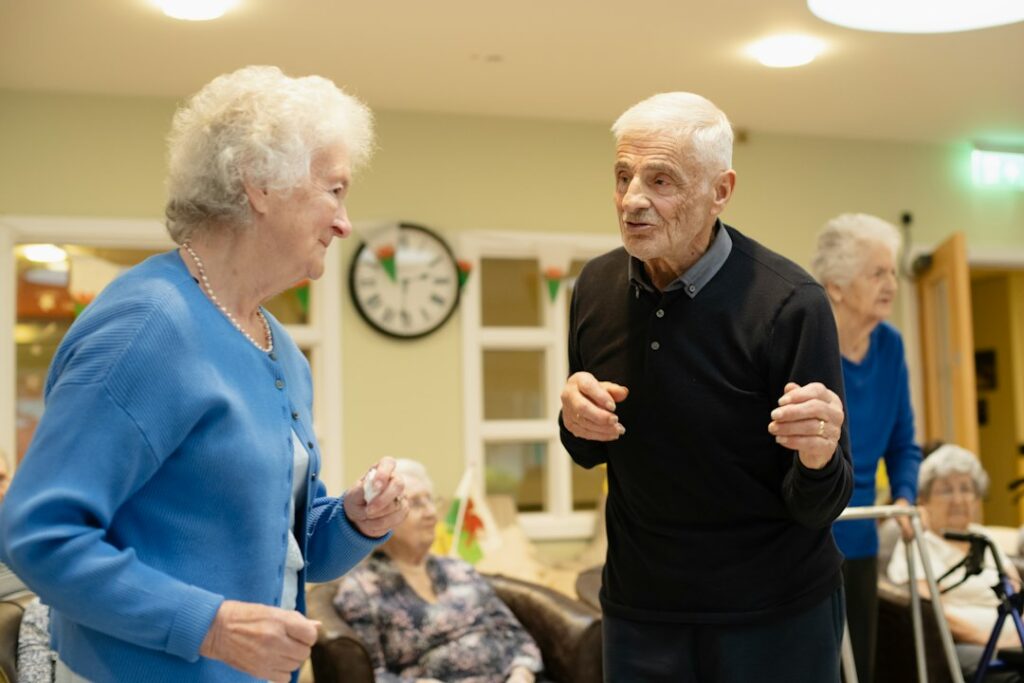
What do assisted living staff help residents with?
Assisted living staff support residents with daily routines, personal care, health-related coordination, safety, meals, social connection, and communication with families. The goal is usually to provide the right amount of help while preserving as much independence, privacy, and choice as possible.
Support may be scheduled, occasional, or available when a resident needs assistance. A resident who manages most activities alone may need help only with medication reminders or transportation. Another resident may need regular assistance with bathing, dressing, walking, or eating.
Staff members commonly include direct-care aides, medication staff, nurses or visiting clinicians, dining employees, activity staff, housekeeping workers, and administrators. Their responsibilities differ, but effective support depends on communication among the entire team.
How is a resident’s care plan used?
A care plan describes the assistance a resident needs and the preferences that make daily life more comfortable. It may include mobility needs, bathing routines, dietary requirements, medication support, communication preferences, sleep habits, and known safety concerns.
Staff use the plan as a guide rather than treating every resident the same. For example, one person may prefer a shower in the morning, while another may need extra time and encouragement before getting dressed. A resident who uses a walker may need supervision in certain areas but not constant assistance.
Care plans can change after an illness, fall, hospitalization, weight change, or noticeable shift in memory or mood. Families should expect staff to communicate significant changes and update the plan when a resident’s needs develop.
What personal care assistance is provided?
Personal care support often includes activities that people once handled without help. Staff may assist with:
- Bathing, showering, and grooming
- Dressing and choosing suitable clothing
- Toileting and incontinence care
- Oral care, hair care, and shaving
- Moving between a bed, chair, and bathroom
- Walking with a cane, walker, or other mobility aid
- Eating, drinking, or opening meal containers
Good personal care is not simply a list of tasks. Staff must protect privacy, explain what they are doing, and allow residents to complete the parts they can manage safely. Rushing a resident may save time in the moment but can reduce confidence and independence over time.
Residents and families may ask how staff handle preferences, same-gender assistance, privacy during care, and requests for additional help. These questions are reasonable and can clarify what support is available during mornings, evenings, overnight hours, and other busy periods.
How do staff support medications and health needs?
Medication support can include reminders, observing whether a resident takes a medication, maintaining records, and coordinating with authorized healthcare personnel. The exact level of assistance depends on the resident’s needs, the medication, and applicable rules.
Staff may also observe changes such as increased confusion, weakness, swelling, poor appetite, unusual sleepiness, or difficulty walking. These observations can help families and healthcare providers recognize a problem earlier.
Assisted living staff do not replace a resident’s medical provider. They may help arrange transportation, prepare information for an appointment, communicate reported symptoms, or follow instructions from a treatment plan. Residents should understand who is responsible for medication decisions, clinical assessments, and emergency care.
How do staff help prevent falls and other injuries?
Fall prevention usually begins with understanding when and where a resident is most vulnerable. Staff may provide reminders to use mobility equipment, keep pathways clear, check that frequently used items are within reach, and offer help during transfers or bathroom visits.
Seasonal conditions can also affect routines for households in Wind Gap. Snow, ice, wet entrances, muddy walkways, and reduced daylight may make outdoor movement more difficult. Indoor flooring, footwear, lighting, and the placement of furniture can matter just as much as outdoor conditions.
Prevention does not mean restricting every activity. Residents should generally be supported in making choices while receiving clear information about risks. A resident may still participate in outdoor walks, dining events, or community activities with suitable planning and supervision.
What support is available for memory loss or confusion?
Residents with memory changes may need consistency, calm explanations, and gentle redirection. Staff can help by maintaining familiar routines, using clear instructions, reducing unnecessary distractions, and watching for patterns that may signal discomfort or illness.
A person who appears confused may be experiencing pain, dehydration, infection, medication effects, poor sleep, or an unfamiliar situation. Staff observations are useful because they may notice changes that are not obvious during a short family visit.
Memory support should not be confused with treating a resident as incapable. Staff can offer choices, use respectful language, and allow extra time for responses. Familiar belongings, photographs, music, and preferred activities may help a resident feel more secure.

How do staff support meals, hydration, and daily comfort?
Meals provide nutrition, but they also create structure and social connection. Staff may help residents get to the dining area, understand menu choices, open packages, use utensils, or follow dietary instructions.
They may monitor whether a resident is eating and drinking less than usual. Reduced intake can result from dental discomfort, difficulty swallowing, medication effects, depression, illness, or simply disliking available food. Repeated concerns should be communicated to the appropriate healthcare professionals and family members.
Comfort also includes room temperature, clothing, positioning, sleep routines, hearing aids, glasses, and access to personal items. Small details can affect whether a resident feels capable and settled during the day.
How do staff support emotional and social well-being?
Staff often notice whether a resident is participating, withdrawing, appearing anxious, or having difficulty adjusting. They may invite residents to activities, introduce neighbors, provide conversation, or help maintain familiar routines.
Participation should be encouraged rather than forced. Some residents prefer small gatherings, quiet hobbies, visits with family, religious observance, gardening, reading, or time outdoors instead of large group programs.
A resident’s emotional well-being can change after moving, losing a spouse, experiencing illness, or becoming less independent. Staff can provide daily support, but persistent sadness, anxiety, sleep disruption, or withdrawal may require evaluation by a qualified healthcare provider.
How can families communicate effectively with staff?
Clear communication works best when families share practical information early. Helpful details may include a resident’s normal habits, preferred foods, hearing or vision challenges, signs of discomfort, cultural preferences, and methods that help calm anxiety.
Families may also ask:
- Who should be contacted about changes in condition?
- How are incidents documented and communicated?
- What happens if a resident refuses care or medication?
- How are nighttime needs handled?
- How are care plans reviewed?
- What support is available during emergencies or severe weather?
Staff should be able to explain how concerns are reported and how decisions are made. Families can help by sharing changes observed during visits and by keeping contact information, medication information, and advance-care documents current.
Assisted living support works best when residents remain active participants in their own routines. Staff provide assistance, observation, and coordination, while residents and families contribute preferences, history, questions, and feedback. The result should be care that is safe and dependable without unnecessarily taking away choice.
