
Assisted living can help older adults maintain regular, meaningful relationships by creating daily opportunities for conversation, shared activities, and community participation. For residents of Wind Gap, PA, this structure may be especially helpful when driving becomes difficult, family members live farther away, or seasonal weather makes independent socializing less predictable.
Social connection is more than having people nearby. It includes feeling known, included, useful, and comfortable enough to participate at a personal pace.
How does assisted living reduce loneliness?
Assisted living reduces loneliness by making social contact part of the daily environment rather than something a person must arrange alone. Residents may see familiar faces during meals, in hallways, at activities, or while spending time in shared lounges.
This regular contact can be valuable for someone who previously spent much of the day alone. Even brief conversations can provide a sense of routine and recognition. Over time, repeated interactions may develop into friendships.
Assisted living does not eliminate loneliness for everyone. Some residents need time to adjust, and some prefer quiet routines. A supportive setting should allow people to participate without pressuring them to attend every activity or socialize constantly.
What types of social activities are common?
Activities vary by community, but many assisted living settings offer a mix of organized programs and informal opportunities. Common examples include:
- Group exercise, stretching, balance practice, or walking
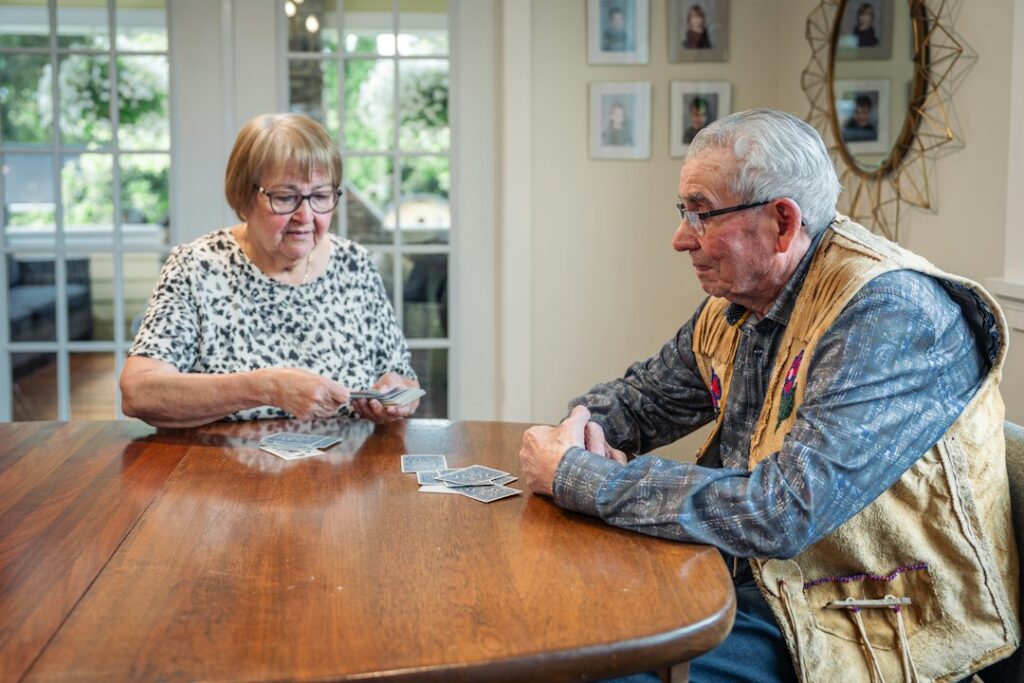
- Card games, puzzles, crafts, music, and discussion groups
- Shared meals and occasional themed dining events
- Religious, reflective, or culturally meaningful gatherings
- Gardening, seasonal decorating, and cooking activities
- Educational talks, current-events conversations, and book discussions
- Birthday celebrations and recognition of personal milestones
- Visits from entertainers, educators, or community groups
- Outdoor time when weather and mobility conditions allow
The value of these activities is not limited to entertainment. They create natural conversation starters and help residents discover shared interests. A resident who does not enjoy large gatherings may connect more easily through a small card game, a gardening project, or a quiet conversation over coffee.
Can assisted living help residents form new friendships?
Yes. Friendships often develop through repeated, low-pressure contact. Seeing the same people during meals or activities gives residents time to become familiar with one another before a closer relationship forms.
Shared life experiences may also create strong connections. Residents may bond over military service, farming or household traditions, music, faith, parenting, travel, local history, or similar work backgrounds. Others may connect through personality rather than age or life history.
Staff members can sometimes help by introducing residents with compatible interests or by inviting a quieter person into a small group. However, friendship cannot be forced. Respect for personal boundaries is essential, particularly for residents who are shy, grieving, experiencing memory changes, or adjusting after a move.
How do shared meals support social well-being?
Meals provide one of the most consistent opportunities for social interaction. Eating in a shared dining area can give residents a dependable time to talk, observe community life, and maintain a daily rhythm.
Mealtimes may also reveal changes in mood or behavior. A resident who usually enjoys conversation but begins eating alone may be experiencing sadness, fatigue, hearing difficulty, illness, or discomfort with the seating arrangement. Staff awareness can help identify whether a small adjustment would make participation easier.
Not every resident enjoys group dining. Some may need quieter seating, flexible timing, assistance with eating, or accommodation for vision and hearing needs. Social connection is more likely when the dining environment feels comfortable rather than overwhelming.
What role do staff members play in social connection?
Staff members often serve as connectors between residents, families, and the wider community. Their role may include learning residents’ interests, noticing who is becoming isolated, and helping people participate in ways that match their abilities.
Simple actions can make a difference:
- Greeting residents by name
- Remembering personal preferences and important life events
- Introducing someone to a compatible activity or neighbor
- Offering conversation during routine care
- Adjusting the pace or setting of an activity
- Including residents with hearing, vision, speech, or mobility limitations
- Encouraging family participation without making it feel required
A resident’s relationship with caregivers can also provide emotional stability. Consistent, respectful interactions help people feel recognized as individuals rather than treated only according to their care needs.
How can families stay socially involved?
Family involvement can continue after a move to assisted living, but it may look different than it did at home. Regular visits are helpful, yet connection can also happen through phone calls, video conversations, letters, photographs, shared meals, and participation in community events.
Visits are often more meaningful when they include a simple activity. Family members might look through photo albums, listen to familiar music, take a supervised walk, work on a puzzle, or share a favorite dessert if permitted by dietary guidelines.
For families in and around Wind Gap, seasonal conditions may affect travel plans. Snow, ice, heavy rain, and shorter winter days can make in-person visits less predictable. A backup plan, such as a regular phone call or video visit, can help maintain continuity when travel is difficult.
Children and grandchildren may also benefit from clear guidance. Short visits with a familiar activity are often easier for both younger visitors and older adults than an unstructured, lengthy visit.

What if a resident does not want to join activities?
A lack of participation does not always mean a resident is lonely. Some people prefer one-on-one conversation, quiet hobbies, or observing rather than joining a group. Personal choice should be respected.
However, sudden withdrawal deserves attention. Changes may be connected to depression, pain, fatigue, medication effects, grief, hearing loss, vision problems, cognitive changes, or difficulty understanding the activity.
Useful questions include:
- Is the activity scheduled at a comfortable time?
- Is the group too large or noisy?
- Can the resident hear or see what is happening?
- Does the activity relate to personal interests?
- Is transportation or mobility assistance available?
- Would a smaller group or individual invitation feel easier?
The goal is not to make every resident highly social. The goal is to support meaningful connection in a form that feels safe and worthwhile.
How does the surrounding community affect social life?
Assisted living communities are influenced by their surroundings. In a smaller, residential area such as Wind Gap, local identity, familiar seasonal traditions, and connections with nearby households may shape social programming. Outdoor activities may be especially appealing during comfortable spring and summer weather, while indoor gatherings become more important during colder or icy periods.
Transportation also matters. If residents cannot drive, access to local events may depend on available transportation, weather conditions, mobility support, and scheduling. Social connection can still be strong when outside travel is limited, but activities should not rely entirely on trips away from the residence.
Community life can include both outside visits and the relationships built within the residence itself. For many residents, a familiar dining table, activity group, or neighbor in the hallway becomes an important part of belonging.
What should families ask about social opportunities?
Families evaluating assisted living can ask practical questions about daily life rather than focusing only on amenities:
- How are new residents introduced to others?
- Are activities offered in small and large group formats?
- What happens if a resident prefers one-on-one interaction?
- Are meals flexible for residents who dislike crowded settings?
- How are hearing, vision, and mobility needs accommodated?
- Are family members welcome at selected events?
- What indoor options are available during severe weather?
- How are changes in participation or mood noticed?
- Can residents suggest activities based on their interests?
The strongest social environment is not necessarily the one with the longest activity calendar. It is the one where residents have genuine choices, familiar faces, respectful support, and multiple ways to participate.
